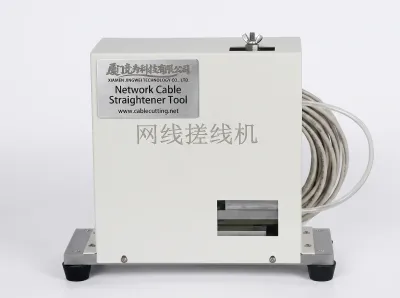
What types of cables can the Pneumatic Network Cable Straightener Tool WPM-RJ45 handle?
This tool is designed for multi-core wire opening and straightening, specifically suited for Cat5 and Cat6 Ethernet cables. It also works with various braided cables, shielded wires, HDMI, multi-core industrial control lines, USB 3.1, Type C, and similar network cables, making it versatile for automotive, electronics, and wire harness processing industries.
How does the foot pedal control enhance usability for industrial cable straightening?
The foot pedal switch control allows hands-free operation, enabling workers to focus on positioning cables while activating the pneumatic straightening process. This reduces labor intensity, increases efficiency, and minimizes fatigue during repetitive tasks in high-volume harness manufacturing.
What is the wire opening length range, and why does it matter for Cat6 cable preparation?
The wire opening length is adjustable from 10mm to 60mm. This range is critical for preparing Cat6 cables because it allows precise stripping and straightening of the twisted pairs and jacket to the required length for proper crimping of RJ45 connectors, ensuring optimal signal integrity and reliable network connections.
Is this pneumatic cable straightener lightweight and easy to integrate into existing production lines?
Yes, at only 7kg with compact dimensions of 21x11x23cm, the tool is lightweight and portable. It can be easily mounted on workbenches or moved between stations. The pneumatic operation requires standard shop air, and the foot pedal control integrates seamlessly into automated or manual cable harness assembly workflows.
What are the key benefits of using this tool over manual cable straightening for industrial applications?
This pneumatic tool automates the straightening and opening process, reducing labor intensity and increasing consistency. It saves time and effort, ensures quality assurance with durable components for long service life, and prepares cables more uniformly for crimping, which reduces errors in high-speed production environments like automotive and electronics manufacturing.
 English
 Chinese
 Russian
 French
 Spanish
 Arabic
 German
 Dutch
Dutch Portuguese
 Italian
 Turkish
 Korean
 Japanese
 Thai
Thai Czech
Czech Traditional Chinese
 Indonesian
 Vietnamese
 Hungarian
 Malay
Malay Swedish
 Finnish
 Danish
 Norwegian
 Polish
 Greek
Greek